Freedom of expression and the right to protection of one’s voice: balancing the interests
April 2021. On a web-radio programme, a well-known commentator from the world of French song laments that record labels no longer launch “handsome” singers or “gorgeous young women”. His remarks, made in particular about a successful young singer, spark a media storm. Three months later, French singer Grand Corps Malade replies in song: his track incorporates excerpts from the interview, featuring the commentator’s voice, for thirty-three seconds out of the one hundred and sixty-one that make up the song. Without authorisation.
Five years of proceedings later, the Cour de cassation (French supreme court) has just reaffirmed1 that the voice is protected in the same way as one’s image. Subject to one important limit: freedom of creation, which the referring Court of Appeal will have to take more fully into account than the first appeal judges did.
A reply song before the courts
The commentator sued the song’s producer and distributor, seeking damages and the removal of his voice from any future exploitation of the track and the music video. He relied on several grounds, including copyright in his remarks and the neighbouring right of the performer. The lower courts rejected these intellectual-property grounds, and that point — now definitively settled — was no longer in dispute before the Cour de cassation. What remained was the ground based on personality rights.
On that basis, the Paris Court of Appeal had ruled in his favour on 17 October 2025: an infringement of the right to one’s image as applied to his voice, ten thousand euros in damages for non-material harm, and removal of the excerpt of his voice, subject to a penalty of five hundred euros for each day of delay.
The voice, protected as an integral part of one’s image
The Cour de cassation states it plainly:
“Like a person’s image, their voice is one of the principal attributes of their personality. It must therefore be protected as such and under the same conditions as the person’s image.”
The legal basis is Article 9 of the Civil Code, read together with Article 8 of the European Convention on Human Rights.
The consequences track the regime governing the right to one’s image directly: everyone controls the recording, retention, reproduction and use of their voice, and the mere finding of an infringement gives rise to a right to compensation, as the Court had held in relation to image2. There is no need to show that your voice has any commercial value or that its use caused you to lose money.
I am regularly asked whether a voice can be “registered”. The answer is no: the timbre of a voice cannot be filed with the INPI as a trade mark, nor recorded anywhere as a work3.
Moreover, spontaneous remarks made during a radio interview are not protectable by copyright unless they are “original”, and speaking into a microphone does not make you a performer. The right to protection of the voice as an attribute of personality takes over precisely where intellectual property stops.
A powerful protection, but not an absolute one
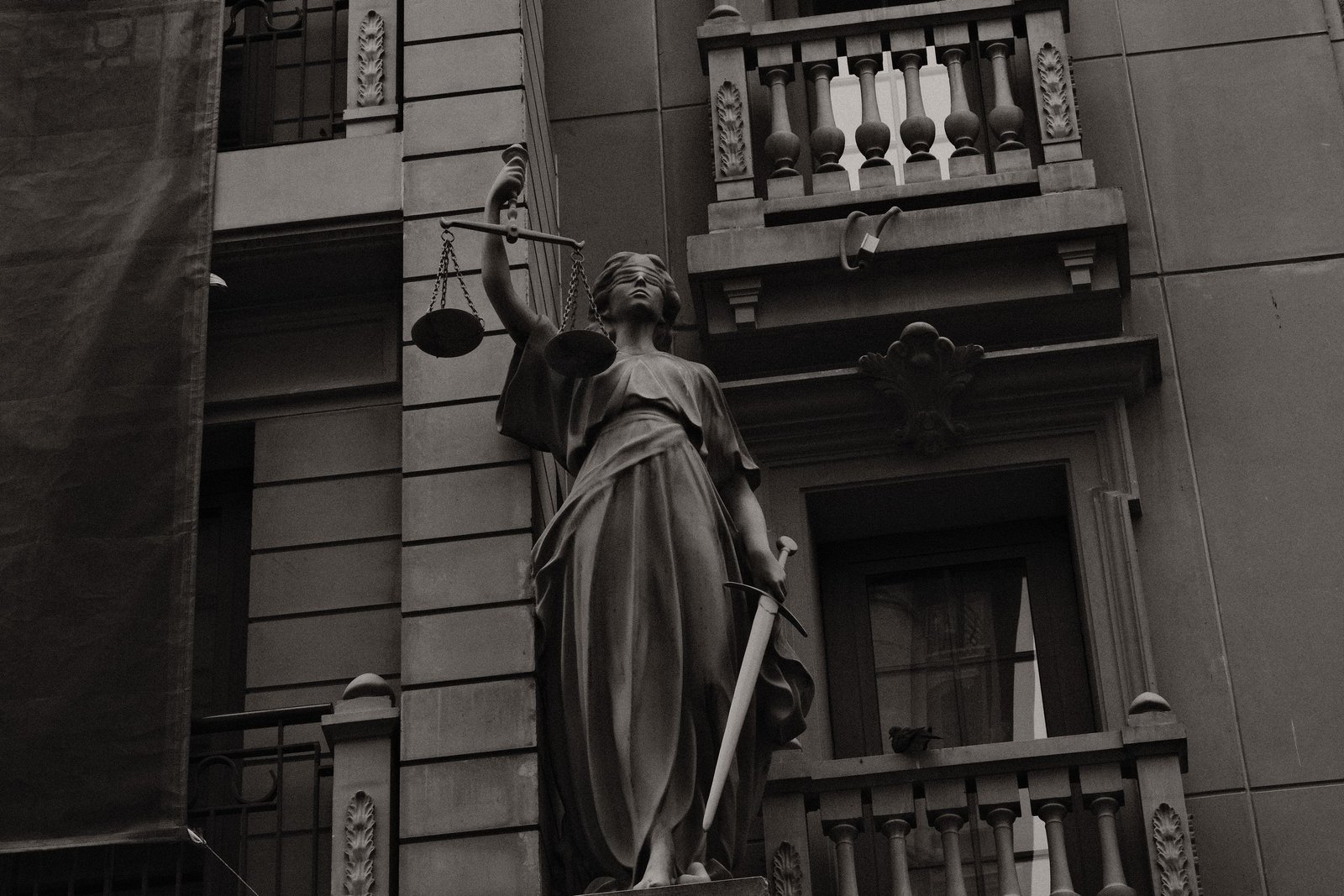
While the Cour de cassation confirms the right to protection of the voice, it nonetheless quashes the conviction. The reason? The right to one’s image and freedom of expression, which encompasses freedom of artistic creation, have the same normative value. When they conflict, the court must weigh them against each other and give precedence to whichever is the more legitimate in the circumstances of the case.
To carry out this balancing exercise, the courts use the criteria developed by the European Court of Human Rights: contribution to a debate of general interest, how well known the person targeted is, that person’s prior conduct, and the content, form and repercussions of the publication. This framework, designed for image, is now officially transposed to the voice.
The debate of general interest, at the heart of the dispute
The Court of Appeal had held that the song contributed to no debate of general interest: to lament the absence of “handsome” singers was merely an opinion on the link between looks and success, not an “important social issue”. The Cour de cassation overturns that reasoning: the remarks had provoked considerable controversy and concerned an important social theme — the role of physical appearance in artistic success. Each of these two criteria was, on its own, sufficient to establish a debate of general interest.
The case is remitted to a differently constituted Paris Court of Appeal, which will have to redo the balancing exercise taking this factor into account. A work that responds to a public controversy by using the voice of the person who started it may well not infringe the right to one’s image.
Voice cloning and AI
The judgment’s significance extends well beyond this particular song and the question of unauthorised sampling. With voice-cloning tools, a few seconds are now enough to make anyone say anything, in an advertisement, a podcast or a video posted online. By confirming the existence of a standalone right to protection of the voice, detached from any requirement of commercial value or financial harm, the Cour de cassation reaffirms the availability of a civil-law basis that can be invoked directly against the exploitation of a cloned voice without authorisation.
This civil basis complements the criminal one: Article 226-8 of the Criminal Code, reinforced by Law no. 2024-449 of 21 May 2024, penalises the publication of montages made using a person’s words without their consent, including content generated by algorithmic processing.
For my clients — artists, producers, agencies and content creators — the rule of conduct is as follows: a third party’s voice, whether real or cloned, must now be handled with the same reflexes as their photograph. Written authorisation, precisely delimited uses, defined duration and media. And if you discover your voice in content you never approved, an action based on Article 9 of the Civil Code allows you to obtain compensation and removal, including on an urgent basis.
Key takeaways
- Your voice is protected as such, as a component of your image, on the basis of Article 9 of the Civil Code
- Unauthorised use alone gives rise to a right to compensation, without any need to show that the voice has commercial value or that a financial loss was suffered
- This protection may yield to freedom of creation where the use contributes to a debate of general interest — a notion construed broadly: significant controversy or an important social theme is enough
- Before using a voice in a podcast, a sample, an advertisement or AI-generated content, obtain a signed authorisation specifying the uses, the media and the duration.
LAZULI advises artists, producers, media, agencies and content creators on questions relating to the right to protection of the voice, the right to one’s image and freedom of creation: risk analysis before release, drafting of authorisations, negotiation and litigation. The firm offers fixed-cost consultations to secure your projects or to respond to unauthorised use of your voice.
Jérémie LEROY-RINGUET, July 2026
- Cass. Civ. 1re, 24 juin 2026, n° 25-20.483 ↩︎
- Cass. Civ. 1re, 2 juin 2021, n° 20-13.753 ↩︎
- It could, at a pinch, be used to register a sound mark, but the sign protected would be the sound file alone and not any other use of the same voice producing different sounds ↩︎